
Table of Contents
When discussing the global trade of Chanos chanos, commonly known as Milkfish or Bangus, three countries dominate the conversation: the Philippines, Taiwan, and Indonesia. For international seafood importers, choosing the right origin is critical. While the Philippines is famous for its national fish, Indonesian milkfish quality has quietly risen to become the gold standard in the export market.
Importers often ask: “Why should I switch to Indonesian Bandeng?” The answer lies not just in the price, but in the superior farming conditions, processing technology, and taste profile. CV New Citra Indonesia, a leading manufacturer based in Semarang, is at the forefront of this revolution. We combine traditional aquaculture wisdom with modern food science to deliver a product that outperforms its rivals. Here are the best and superior reasons why sourcing Milkfish from Indonesia is the smartest move for your business.
1. Natural Farming Environment: The Archipelago Advantage
The secret to Indonesian milkfish quality begins in the water. Indonesia is the world’s largest archipelago with a vast coastline and ideal tropical climate. Unlike intensive farming systems that can lead to overcrowding and disease, Indonesian milkfish are largely farmed in traditional brackish water ponds known as Tambak.
These ponds, particularly along the northern coast of Java (where New Citra is located), benefit from a rich mix of seawater and freshwater. This natural ecosystem allows the fish to grow at a healthy pace without excessive reliance on artificial antibiotics. The result is a fish with firmer meat texture and a cleaner, sweeter natural flavor compared to fish raised in stagnant, overcrowded waters elsewhere.
2. Eliminating the “Muddy Taste” (Bau Tanah)
The biggest complaint global consumers have about milkfish is the “muddy” or earthy taste, caused by a compound called Geosmin found in certain algae. This is a common issue in milkfish from various origins. However, CV New Citra Indonesia takes this issue very seriously.
To ensure premium Indonesian milkfish quality, we implement a strict purging process. Before harvest, the fish are transferred to clean, flowing water tanks for a specific period to flush out any residual Geosmin. Furthermore, our processing technique involves meticulous cleaning of the belly cavity, specifically removing the black membrane (peritoneum) which often harbors bitter tastes. This attention to detail ensures that when your customer takes a bite, they taste the delicate fish meat, not the pond bottom.
3. The “Soft-Bone” Innovation (Bandeng Duri Lunak)
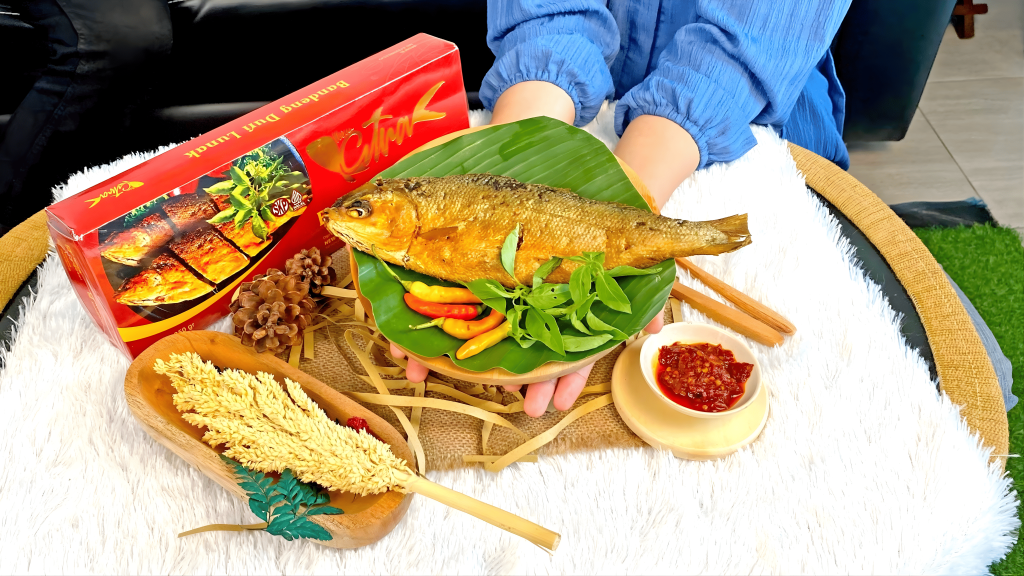
Milkfish is notorious for being bonier than most fish, having approximately 164 intermuscular spines. This makes it difficult to eat, especially for children or Western consumers unaccustomed to picking out bones. While the Philippines offers “Deboned Bangus” (manual removal), Indonesia—and specifically Semarang—is famous for Bandeng Duri Lunak (Soft-Bone Milkfish).
New Citra utilizes high-pressure cooking technology (Retort) that turns these hard bones into soft, edible calcium. This processing method does not just remove the annoyance of bones; it adds nutritional value. Consumers can eat the entire fish, head to tail, gaining extra calcium and collagen. This unique selling point sets Indonesian milkfish quality apart, offering a convenient “Ready-to-Eat” product rather than just a raw frozen fish.
4. Retort Technology vs Traditional Frozen
Most competitors export milkfish in raw frozen blocks. While cheap, this method entails high shipping risks and requires the end consumer to cook from scratch. New Citra elevates Indonesian milkfish quality by offering Retort-processed products.
Our milkfish is seasoned with authentic spices (turmeric, garlic, coriander), vacuum-sealed, and sterilized. This means the product is shelf-stable at room temperature for up to 12 months. For importers, this is a logistics dream. You do not need expensive reefer containers for the entire distribution chain, and you can sell to markets with limited cold chain infrastructure. This added value makes our product a “Premium Convenience Food,” commanding a higher margin than raw commodity fish.
5. Guaranteed Halal and Food Safety
Indonesia is the global hub for Halal food. While other exporting nations may view Halal as just a label, for us, it is a way of life. New Citra’s production facility is strictly Halal-certified, ensuring no cross-contamination with non-Halal substances (like alcohol or pork derivatives) during processing or cleaning.
Moreover, we adhere to HACCP (Hazard Analysis Critical Control Point) and GMP (Good Manufacturing Practices). Every batch of fish is traceable. We regularly test for heavy metals and histamine levels to meet the stringent regulations of the FDA (USA) and EFSA (Europe). When you buy Indonesian milkfish quality from New Citra, you are buying peace of mind.
Conclusion: Make the Switch Today
The global seafood market is evolving. Consumers are demanding better taste, higher safety standards, and more convenience. While Bangus from other regions has its history, Indonesian milkfish quality represents the future.
CV New Citra Indonesia invites you to experience the difference. From our pristine ponds in Central Java to our advanced retort facility in Semarang, every step is designed to deliver the best Milkfish to your table. Don’t settle for muddy, bony, or raw commodity fish. Upgrade your inventory with New Citra’s Soft-Bone Milkfish. Contact us today for a sample and see why buyers worldwide are switching to Indonesia.